The Iron Maiden That Never Was: Anatomy of a Torture Myth
 2026/07/02
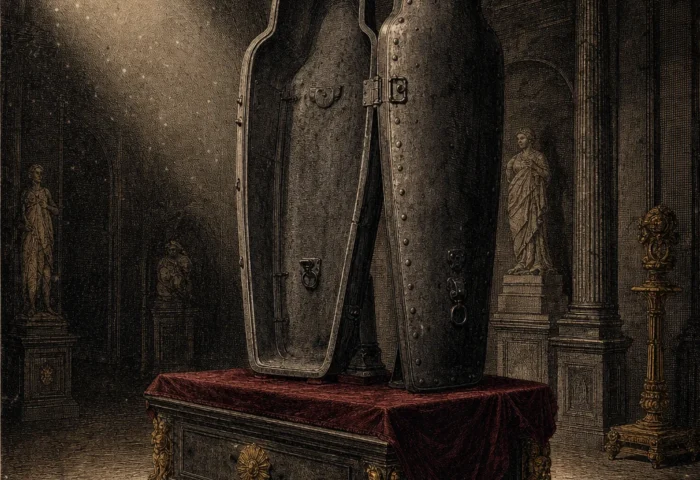
The spiked cabinet that fills museum gift shops has almost no basis in the medieval record. Its origins are far more recent,…

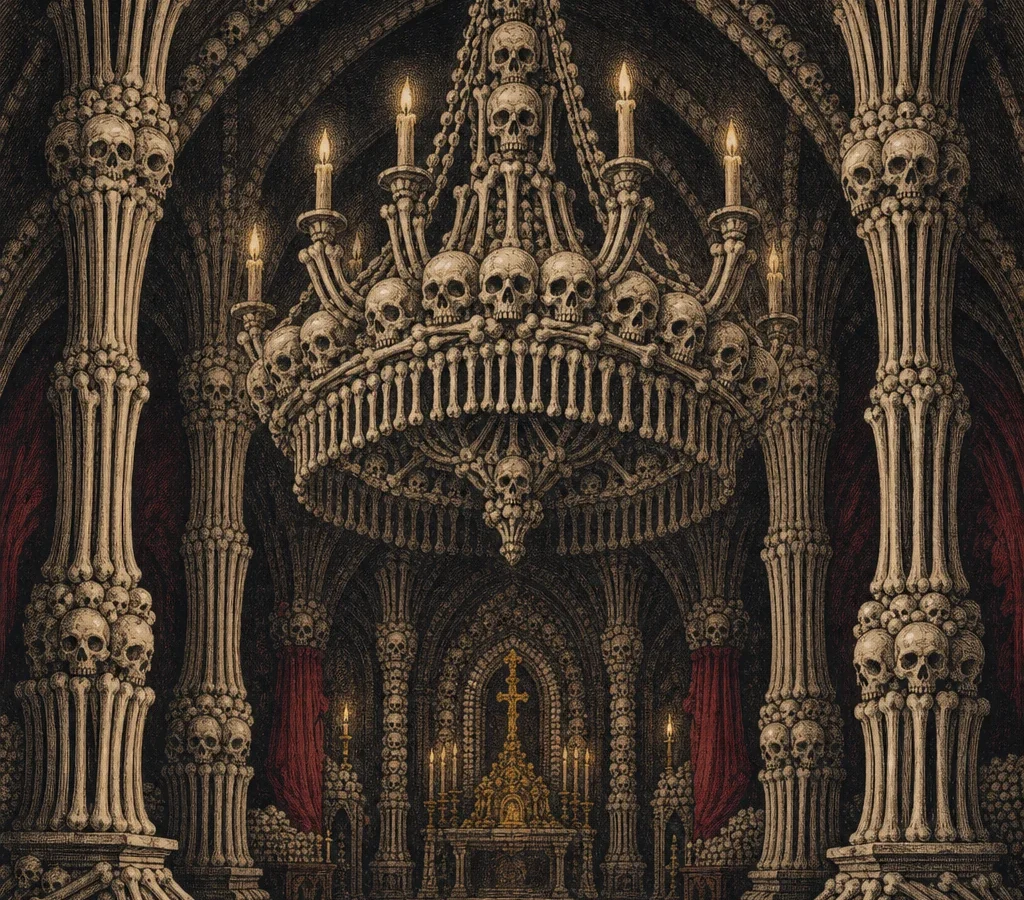
Beneath a small chapel in the Czech town of Kutná Hora, the bones of tens of thousands are arranged into chandeliers, garlands and coats of arms.
Filed by The Curator — 2026/07/07.
Beneath a modest Gothic chapel on the outskirts of Kutná Hora, in the Bohemian heartland of the Czech Republic, lies one of the most disquieting works of devotional art in Europe. The Sedlec Ossuary — the Kostnice v Sedlci — is a small subterranean space, no larger than an ordinary parish chapel, and yet it is furnished almost entirely with…
Read the full account 2026/07/02
The spiked cabinet that fills museum gift shops has almost no basis in the medieval record. Its origins are far more recent,…
 2026/06/29
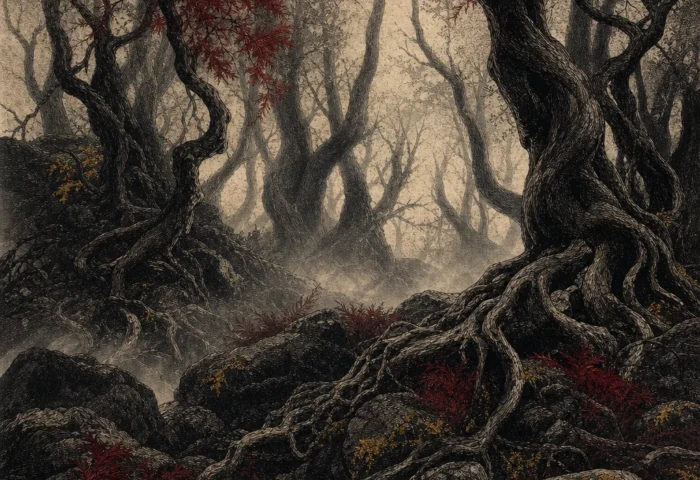
The dense forest at the foot of Mount Fuji has gathered centuries of ghost stories, from yūrei spirits to compasses that supposedly…
 2026/06/25
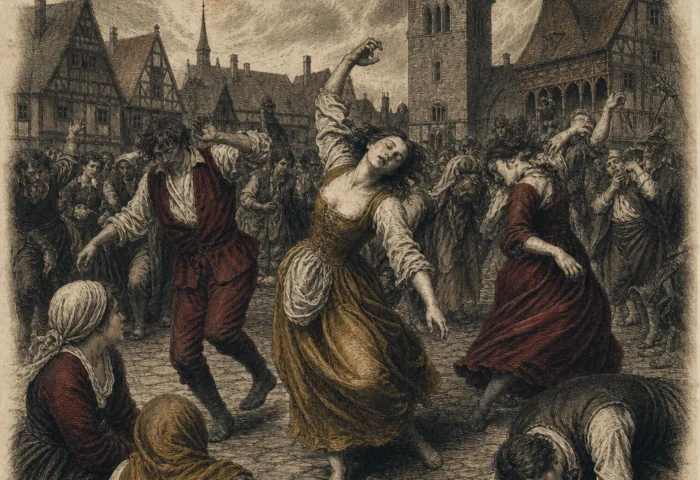
In the summer of 1518, hundreds of people in Strasbourg danced without rest for days. Some collapsed; contemporary accounts say a number…
Welcome. You have found Death & Dementia, a journal of the strange and the fatal — a place where the darkest corners of human experience are examined by lamplight rather than flashbulb. I am the Curator, and this is the desk from which I write. What we do here is simple to state and harder to do well: we take dark subjects seriously, and we take the people in them seriously too.
There is no shortage, elsewhere, of the loud and the lurid — the sites that treat a death as a punchline or a body as a special effect. This journal is built on the opposite instinct. A strange death, an unsolved crime, an old and frightening belief: each of these is a genuine piece of the world, and each deserves to be understood rather than merely gawked at. History, science, and folklore are our instruments. Shock is not.
The journal is arranged into a handful of rooms, and you are free to wander any of them. Under Crime & Punishment you will find the cases that resist easy answers — the confessions, the trials, the disappearances, the long shadows that certain crimes cast across the decades. These pieces are less interested in blood than in the puzzle: what happened, what was proven, and what the record still refuses to say.
Under Death & Disfigurement we turn to the body and its undoing — the improbable ways a life can end, the medical anomalies that rewrote textbooks, the deaths so ironic or so quiet that they lodged in the historical record and stayed there. This is the most delicate of the rooms, and I write in it with particular care. A human being stands behind every entry.
Under Halloween & Horror the tone lifts a little. Here we keep the season’s own material: the origins of our ghost stories, the folk customs of the dead, the reasons certain nights of the year have always made people bolt the door. It is the room where the frightening becomes fascinating — where fear itself becomes the subject of study.
Under Paranormal & Anomalies we walk carefully along the edge of the explained. I make no grand claims of the supernatural here, and no scoffing dismissals either. What interests me is the account that will not quite resolve — the sighting, the sound, the coincidence too neat to be comfortable — and what such accounts reveal about the minds that record them.
At the heart of the journal stands the Cabinet of Curiosities — a wall of small drawers, each holding one true, strange, self-contained thing. It takes its inspiration from the real Wunderkammer of Renaissance Europe, the wonder-chambers in which collectors once gathered marvels of nature and artifice side by side. Where the longer essays in each room let a single subject breathe, the Cabinet is for browsing: open a drawer, consider what is inside, and either close it again or let it lead you somewhere deeper. You may pull the handles that call to you, or ask the Cabinet to choose one at random. It is, I confess, my favourite room in the house.
There is no correct order. Some readers arrive following a single case they half-remember and read only that; others treat the journal as a nightstand companion, taking one piece before sleep. Both suit me. Every article is written to stand on its own, so you may begin anywhere and never feel you have walked in halfway through a conversation.
What I will ask of you is only this: a willingness to look at difficult things without looking away, and without pretending they are not difficult. The subjects gathered here are, by nature, sombre. But sombre is not the same as heartless. My aim throughout is to write about death, crime, dread, and the unexplained with the seriousness they demand and the humanity the people in them deserve — to be, in the oldest sense, a keeper of curiosities rather than a dealer in cheap frights.
New pieces appear as I find subjects worthy of the space, and the Cabinet grows drawer by drawer alongside them. So consider this an open door. Step inside, take a lamp, and begin wherever your curiosity points — the archives of Crime & Punishment, the quiet rooms of Death & Disfigurement, or the strange wall of drawers itself. Whatever you came looking for, I suspect you will leave with something you did not expect. That, after all, is rather the point.